Best Honey for Tea: Which Type Makes Every Cup Better?
Share
A warm cup of tea can be calming, refreshing, or energizing, depending on the blend you choose. Adding honey can make that experience even better by bringing natural sweetness, floral aroma, and a smoother finish to every sip.
However, not every honey tastes the same. Some varieties are light and delicate, while others are dark, rich, earthy, or slightly spicy. The best honey for tea depends on the type of tea you are preparing and the flavor you want to create.
Pure Raw Brands offers raw and unfiltered honey varieties sourced directly from beehives and produced with an emphasis on natural flavor, quality ingredients, and sustainable beekeeping practices. Whether you enjoy green tea in the morning, herbal tea before bed, or iced tea on a warm afternoon, choosing the right honey can transform an ordinary cup into something memorable.
Is Honey Good in Tea?
Yes, honey can be an excellent addition to tea. It provides sweetness while adding more flavor complexity than ordinary white sugar.
Sugar mainly makes tea sweeter. Honey can contribute floral, fruity, citrusy, earthy, or caramel-like notes depending on the flowers visited by the bees. This makes honey especially useful for enhancing tea without overpowering its natural character.
Honey is still a form of added sugar, so portion size matters. A teaspoon is often enough to sweeten one cup. People managing diabetes, insulin resistance, or other health conditions should discuss regular honey consumption with a qualified healthcare professional.
What Are the Benefits of Honey in Tea?
One of the main benefits of honey in tea is that it can make unsweetened beverages more enjoyable. This may help people replace heavily sweetened drinks with a simpler beverage they prepare themselves.
Honey may also provide small amounts of naturally occurring plant compounds, including phenolic compounds and antioxidants. The exact composition varies according to the floral source, region, storage conditions, and processing method. Darker varieties often have a stronger flavor and may contain higher levels of certain antioxidant compounds than lighter varieties.
Adding honey to warm tea may also feel soothing when the throat is dry or irritated. However, honey should be viewed as a food rather than a cure for infections or medical conditions.
Common reasons people enjoy honey in tea include:
- Natural sweetness with greater flavor depth
- A smoother taste in bitter or strongly brewed tea
- Comfort for a mildly irritated throat
- Easy pairing with lemon, ginger, cinnamon, or mint
- An alternative to refined table sugar
- A wide variety of floral flavor profiles
What Is the Best Honey for Tea?
The best honey for tea is usually raw, flavorful, and minimally processed. Raw unfiltered honey is particularly appealing because it retains its natural aroma, texture, and distinctive characteristics.
Pure Raw Brands’ Raw Unfiltered Honey is designed for uses such as sweetening tea, coffee, and baked goods. It is available in different jar sizes and is described as U.S. Grade A and KSA Kosher Certified.
The right choice also depends on your tea.
Best Honey for Green Tea
When choosing honey for green tea, look for a light or moderately flavored variety. Green tea can have grassy, vegetal, floral, or slightly bitter notes. A very dark honey may overpower those delicate flavors.
Orange blossom honey is an excellent option because its mild citrus and floral character complements green tea. It also pairs naturally with lemon, mint, and fresh ginger.
Raw unfiltered honey can also work well when used sparingly. Begin with half a teaspoon, taste the tea, and add more only when needed.
For a balanced cup:
-
Brew the green tea according to the package directions.
-
Remove the tea leaves or tea bag.
-
Allow the drink to cool slightly.
-
Stir in half to one teaspoon of honey.
-
Add lemon or mint if desired.
Best Honey for Black Tea
Black tea has a stronger body than green tea, so it can support a richer honey.
Dark wildflower honey is a good match for English breakfast tea, Assam, chai, and other bold black teas. Its deeper flavor can complement the roasted, malty, and spicy notes in the tea.
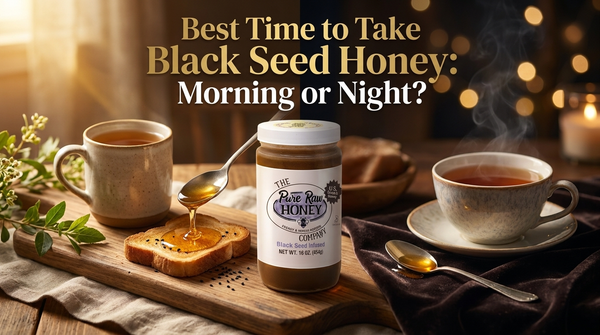
Black seed honey may also be suitable for drinkers who prefer a more distinctive, earthy profile. Pure Raw Brands currently offers both Black Seed Honey and Dark Wildflower Honey among its honey selections.
For chai, try combining honey with cinnamon, cardamom, ginger, and a small amount of milk. The honey rounds out the spices without creating the flat sweetness associated with heavily processed syrups.
Best Honey for Herbal Tea
Herbal teas offer some of the most versatile honey pairings.
Chamomile tea works well with a mild floral honey because both flavors are soft and calming. Peppermint tea is best paired with a clean, light honey that does not compete with the mint.
Ginger or turmeric tea can support stronger varieties. A dark wildflower honey, black seed honey, or infused wellness honey can create a deeper, warmer flavor.
For fruit-based teas, blueberry blossom honey may add complementary fruity and floral notes. Pure Raw Brands offers Blueberry Blossom Honey Unfiltered as part of its premium honey collection.
Can You Put Honey in Iced Tea?
Yes, but honey dissolves more easily in warm liquid than in cold tea.
To make honey-sweetened iced tea, stir the honey into the tea while it is still warm. Then allow the mixture to cool before adding ice. This distributes the sweetness evenly and prevents honey from collecting at the bottom of the glass.
Another option is to prepare a simple honey syrup by mixing equal amounts of honey and warm water. Store the mixture in the refrigerator in a sealed container and use it to sweeten iced tea, lemonade, or other cold drinks.
When to Add Honey to Tea
The best time to add honey is after the tea has brewed and cooled slightly.
Very hot tea can reduce some heat-sensitive compounds and may also make it harder to appreciate honey’s delicate aroma. You do not need to wait until the drink becomes cold. Simply let freshly boiled tea rest for a few minutes before stirring in the honey.
A practical method is to wait until the tea is comfortable to sip. Then add the honey and mix thoroughly.
Avoid placing a wet spoon inside the honey jar. Introducing water or food particles may affect quality during storage. Use a clean, dry utensil each time.
How Much Honey Should You Add?
For most cups, start with half to one teaspoon.
The ideal amount depends on:
-
The strength and bitterness of the tea
-
The sweetness of the honey
-
Whether milk, lemon, or spices are included
-
Your dietary needs
-
Your personal taste
Taste before adding a second spoonful. Raw honey can have a fuller flavor than processed sweeteners, so less may be needed.
How to Choose the Best Raw Honey for Tea
When shopping for honey, read the product description carefully.
Look for honey that clearly identifies its type, such as raw, unfiltered, orange blossom, wildflower, or blueberry blossom. These details help you understand what flavor to expect.
Quality raw honey may naturally crystallize over time. Crystallization does not automatically mean the honey has spoiled. It is a normal process influenced by temperature and the natural sugar composition of the honey.
To soften crystallized honey, place the closed jar in a bowl of warm water. Avoid boiling or microwaving it, as excessive heat can affect flavor and texture.
Explore and Order Honey From Pure Raw Brands
Pure Raw Brands offers a selection of raw and unfiltered honey varieties that can be paired with green, black, herbal, chai, and iced tea. Available choices may include Raw Unfiltered Honey, Orange Blossom Honey, Dark Wildflower Honey, Blueberry Blossom Honey, Black Seed Honey, honeycomb, and specialty blends.
To place an order, visit Pure Raw Brands, browse the available honey collection, select your preferred variety and jar size, and add it to your cart. Product availability and pricing may change, so check the individual product page for current ordering and delivery details.
Choosing the best honey for tea is ultimately about matching flavor with flavor. Light honey works beautifully with delicate teas, while darker honey complements bold, spicy, and full-bodied blends. Start with a small amount, add it after the tea cools slightly, and experiment until you find your favorite combination.
Frequently Asked Questions
1. Can you put honey in tea?
Yes. Honey can be added to green, black, herbal, chai, and iced tea. It sweetens the drink while adding floral or earthy flavor notes.
2. Is honey good in tea?
Honey can be a flavorful alternative to refined sugar when used in moderation. It is still an added sugar and should be included within your overall dietary needs.
3. What is the best honey for tea?
Raw unfiltered honey is a versatile choice. The best specific variety depends on whether the tea is light, bold, fruity, minty, or spicy.
4. What is the best honey for green tea?
Light floral varieties, including orange blossom honey, pair well with green tea because they complement its delicate flavor without overwhelming it.
5. When should you add honey to tea?
Add honey after brewing, once the tea has cooled enough to sip comfortably. This helps preserve its aroma and prevents unnecessary exposure to extreme heat.
6. Does honey lose its benefits in hot tea?
Very high temperatures may affect some heat-sensitive components. Allowing the tea to cool slightly before adding honey is a sensible approach.
7. How much honey should I put in tea?
Begin with half to one teaspoon per cup. Stir, taste, and add more only if needed.
8. Can raw honey be used in iced tea?
Yes. Mix it into the tea while the liquid is still warm, then cool and add ice. Honey syrup can also be used in cold drinks.
9. Why does raw honey crystallize?
Crystallization is a natural process and does not necessarily indicate spoilage. Gently warming the closed jar in warm water can restore a smoother texture.
10. Can children have honey in tea?
Honey must never be given to a child younger than 12 months because of the risk of infant botulism. Ask a pediatric healthcare professional about appropriate foods and drinks for young children.