Raw Honey vs Regular Honey: What’s the Difference?
Share
Honey has been enjoyed for centuries as a naturally sweet food, but today's grocery shelves offer more choices than ever. Some jars are labeled raw or unfiltered, while others contain the smooth, clear honey most shoppers recognize from supermarkets. That raises an important question: What is the difference between raw honey and regular honey?
The main distinction usually involves processing. Raw honey generally stays relatively close to the condition in which it was harvested from the hive, while conventional commercial honey may undergo more heating and filtration to create a consistent appearance, texture, and shelf presentation.
However, raw honey vs regular honey is not simply a matter of declaring one "good" and the other "bad." Both are honey, both contain sugars, and processing practices can vary considerably between producers.
This guide explains processed honey vs raw honey, how processing can affect characteristics such as texture and appearance, and what consumers should consider when choosing honey for their household.
What Is Raw Honey?
Raw honey generally refers to honey that has undergone relatively minimal processing after being harvested from the hive.
Bees collect nectar from flowers and transform it into honey before storing it inside honeycomb cells. Beekeepers harvest the mature honey, which may then be strained to remove larger pieces of wax and other hive material before packaging.
The exact meaning of "raw" can vary among producers, so consumers should read individual product descriptions rather than assuming every raw honey is handled identically.
Raw honey can naturally vary in color, flavor, aroma, thickness, and crystallization.
For shoppers interested in a versatile minimally processed option, Raw Unfiltered Honey 16oz provides an everyday choice for toast, tea, oatmeal, cooking, and other uses.
What Is Regular Honey?
"Regular honey" is not a precise scientific category. Consumers usually use the term to describe commercially processed honey commonly found in supermarkets.
Depending on the producer, this honey may undergo heating and filtration before packaging.
These steps can serve practical purposes. Processing can make honey easier to handle, improve clarity, create a more uniform appearance, and help delay visible crystallization.
Not every commercially packaged honey receives exactly the same treatment. Processing temperatures, filtration methods, storage, and production practices vary.
Therefore, consumers should avoid assuming that every jar labeled raw is completely unprocessed or that every conventional honey has undergone identical intensive processing.
Reading the product information remains important.
How Is Raw Honey Different From Regular Honey?
The primary difference between raw honey and regular honey generally comes down to what happens after the honey leaves the hive.
Raw honey typically undergoes less processing. It may be strained to remove larger particles while retaining more of its original physical characteristics.
Regular commercial honey may be heated and more extensively filtered to achieve greater consistency and clarity.
These differences can affect:
- Appearance
- Texture
- Aroma
- Flavor
- Crystallization behavior
- Consistency between batches
Raw honey may look cloudier or develop crystals sooner, depending on the variety.
Regular honey may remain clearer and more uniformly liquid for longer because of how it has been processed.
Neither appearance alone proves quality or authenticity.
How Does Processing Change Honey?
Understanding processed honey vs raw honey requires looking at why honey is processed in the first place.
Heating lowers viscosity, making honey easier to filter and package. Filtration can remove wax fragments and other particles, resulting in a clearer final product.
Processing can also help manufacturers create a consistent consumer experience across large batches.
Raw honey may retain more variation between harvests because agricultural foods naturally change with floral sources, seasons, weather, and geography.
Consumers who prefer foods that remain relatively close to their harvested condition may therefore be more attracted to raw honey.
Others may prioritize clarity, predictable texture, and slower visible crystallization.
The choice depends partly on what characteristics matter most to you.
Is Raw Honey Better Than Regular Honey?
People frequently ask, is raw honey better than regular honey?
There isn't a universal answer.
Raw honey appeals to many consumers because it undergoes comparatively little processing and may retain more of the naturally occurring characteristics associated with the original honey.
However, "raw" does not mean sugar-free, calorie-free, medicinal, or appropriate in unlimited quantities.
Honey—raw or processed—is primarily composed of sugars.
Rather than treating raw honey as a miracle food, consider it one option within an overall diet.
Quality also matters. A well-described product from a transparent seller may be a better buying decision than choosing something solely because the word "raw" appears prominently on its packaging.
What Are Raw Honey Benefits vs Regular Honey?
Discussions about raw honey benefits vs regular honey often become exaggerated.
Raw honey contains naturally occurring compounds originating from nectar and the honey-making process. Because it undergoes less processing, consumers often choose it when they want honey that remains closer to its harvested state.
Heating and filtration can alter some characteristics of honey, although the extent depends on processing conditions.
From a practical standpoint, potential reasons people prefer raw honey include its distinctive floral character, natural variation, texture, aroma, and minimal-processing appeal.
However, both raw and conventional honey contain substantial amounts of naturally occurring sugars.
Neither should be treated as a replacement for medical treatment or as a food that can be consumed without considering overall sugar intake.
Why Choose Raw Honey Over Regular Honey?
There are several practical reasons why choose raw honey over regular honey may make sense for certain shoppers.
You may prefer:
- Minimally processed foods
- Natural variation between honey harvests
- Distinct floral flavors
- Different textures
- Unfiltered varieties
- Honey closer to its harvested form
Taste can be particularly important.
Honey is not a single uniform flavor. Nectar source influences aroma, color, and flavor, which means exploring floral varieties can provide noticeably different experiences.
For example, Blueberry Blossom Honey Unfiltered 16oz offers a different floral-source option for consumers who want to explore beyond conventional blended honey.
Personal preference should play a major role in your decision.
How Does Floral Source Affect Raw Honey?
Bees gather nectar from flowering plants around their hive. When a particular floral source predominates, it can give honey recognizable sensory characteristics.
This helps explain why honey can range from light and delicate to dark and robust.
For example, Orange Blossom Honey 16oz represents a blossom-specific option, while Dark Wildflower Honey 16oz offers another flavor and color profile.
These differences are not necessarily indicators that one variety is more authentic or healthier.
Instead, floral source provides consumers with choices.
Someone may prefer a lighter blossom honey for breakfast while choosing a stronger wildflower variety for cooking or cheese boards.
How Does Crystallization Differ Between Raw and Regular Honey?
Crystallization is a natural process that can occur in genuine honey.
Honey contains glucose and fructose. Under suitable conditions, glucose begins forming crystals, causing the texture to become thicker, grainier, or eventually semi-solid.
Raw honey may sometimes crystallize sooner because naturally occurring particles can provide sites around which crystals form.
Commercial processing and filtration can help delay visible crystallization, which is one reason some supermarket honey stays clear and liquid longer.
However, crystallization varies greatly according to floral source, sugar composition, moisture, temperature, and storage.
A crystallized jar is not automatically spoiled.
Likewise, honey remaining liquid for a long time does not automatically mean it is fake.
What Does Color Tell You About Raw and Regular Honey?
Color isn't a dependable way to distinguish raw honey from regular honey.
Honey naturally appears in a wide spectrum of shades, from pale gold to deep amber or brown.
Floral source is one major factor.
Processing and storage can also influence appearance, but you cannot reliably look at two jars and determine which one is raw simply because one is darker or cloudier.
Instead of treating color as a quality test, use it as part of the sensory experience.
If you prefer deeper-colored varieties and regularly use honey at home, Dark Wildflower Honey 44oz offers a larger-size option.
How Do Raw and Regular Honey Taste Different?
Processing can influence honey's sensory characteristics, but floral source is also extremely important.
Raw honey may retain distinctive aromas and flavors associated with its botanical origin. Some consumers describe different varieties as floral, fruity, earthy, rich, mild, or robust.
Regular commercial honey may be blended to create a more consistent flavor from one purchase to another.
Neither approach is automatically wrong.
Consistency may appeal to someone who wants the same familiar sweetness every time. Raw honey may appeal to someone interested in experiencing natural differences between floral varieties and harvests.
The best way to choose is according to your own palate and intended use.
Which Honey Is Better for Cooking and Baking?
Both raw and regular honey can be used in many recipes.
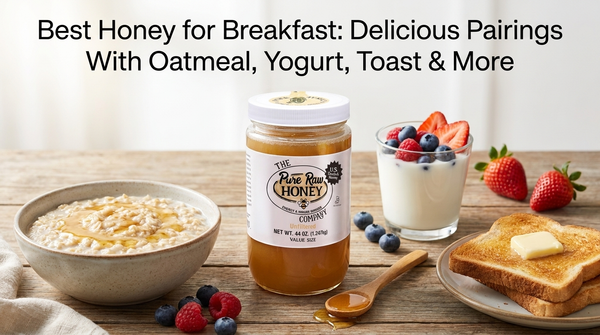
Honey works well in marinades, sauces, salad dressings, baked goods, oatmeal, yogurt, tea, and numerous savory dishes.
If you're heating honey during cooking anyway, some consumers may prefer to reserve distinctive raw varieties for applications where their flavor can be appreciated more directly.
Specialty products can also provide additional culinary options.
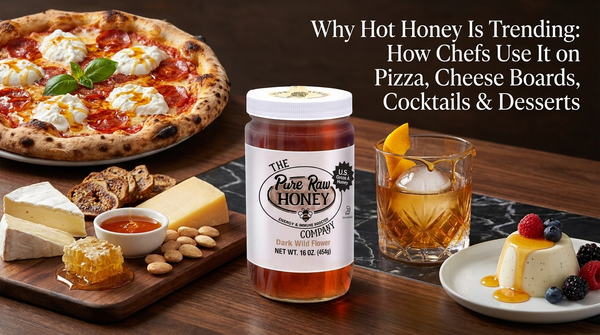
For example, Hot Honey 16oz can complement pizza, roasted vegetables, chicken, sandwiches, and other savory foods.
Your recipe—not simply the word "raw"—should help determine which honey makes sense.
How Should You Store Raw Honey?
Store honey in a securely closed container in a dry place away from excessive heat and direct sunlight.
Use clean, dry utensils to avoid introducing unnecessary moisture.
Refrigeration is generally not required and can encourage crystallization.
If raw honey crystallizes, this does not automatically mean it has spoiled. Gentle warming may help restore a more fluid consistency when desired.
Consumers who use honey frequently may find that purchasing a larger container is more practical. Raw Unfiltered Honey 44oz, for example, provides an option for households that regularly use honey for drinks, breakfast, cooking, or baking.
When Should You Be Careful With Honey?
Honey should be enjoyed as a food rather than viewed as a treatment for disease.
Despite online claims about the benefits of raw honey compared to regular honey, raw honey should not replace appropriate medical care.
People managing diabetes or other conditions requiring attention to sugar intake should seek individualized advice from a qualified healthcare professional when needed.
Most importantly, honey should never be given to infants younger than 12 months because of the risk of infant botulism. This recommendation applies to both raw and processed honey.
Consumers should also be cautious of sellers making extraordinary claims that a particular honey can prevent or cure serious illnesses.
Where Can You Buy Raw Honey Online?
If minimal processing, distinctive floral varieties, and different flavor profiles appeal to you, you can explore the available selection at Pure Raw Brands.
Read each product description before purchasing so you understand the variety, size, and intended characteristics.
Consumers can also review Pure Raw Brands free shipping information before checking out.
Businesses interested in larger purchasing opportunities can find additional information through the wholesale page.
Choose a honey that matches your flavor preferences and everyday needs, review its product details, add your preferred option to your cart, and place your order online.
What Are Common Questions About Raw Honey vs Regular Honey?
1. What is the main difference between raw honey and regular honey?
The primary difference generally involves processing. Raw honey undergoes comparatively minimal processing, while conventional commercial honey may be heated and more extensively filtered.
2. Is raw honey better than regular honey?
Not universally. Raw honey appeals to people who prefer minimally processed foods and distinctive natural characteristics, but both raw and regular honey contain significant amounts of sugar.
3. Is raw honey healthier than processed honey?
Processing can affect some naturally occurring characteristics of honey, but "raw" should not be interpreted as automatically healthy in unlimited quantities. Overall diet and portion size still matter.
4. Why does raw honey crystallize?
Glucose within honey can naturally form crystals. Floral source, sugar composition, storage temperature, moisture, and other factors influence how quickly crystallization occurs.
5. Does crystallization mean raw honey is better?
No. Crystallization is natural in many genuine honeys, but it does not independently establish quality, purity, or nutritional superiority.
6. Can regular honey also crystallize?
Yes. Conventional honey can crystallize too, although certain processing and filtration practices may delay visible crystal formation.
7. Does raw honey taste different from regular honey?
It can. Raw honey may retain distinctive characteristics associated with its floral source, while some commercial honeys are blended and processed for greater consistency.
8. Can raw honey be used in cooking?
Yes. Raw honey can be used in sauces, marinades, baked goods, drinks, breakfast foods, and many other recipes.
9. Can babies eat regular honey instead of raw honey?
No. Infants younger than 12 months should not be given any honey, whether raw, pasteurized, processed, or incorporated into food, because of the risk of infant botulism.
10. How should I choose between raw and regular honey?
Consider processing preferences, flavor, floral source, intended use, package size, ingredient information, and seller transparency. Choose the product that best matches your needs rather than relying on one label term.
Medical Disclaimer
This article is for general educational purposes and is not medical advice. Honey should never be given to infants under 12 months; consult a qualified healthcare professional for individual dietary or health concerns.